See Our Latest Blogs
Explore our blogs and learn about singing❤️
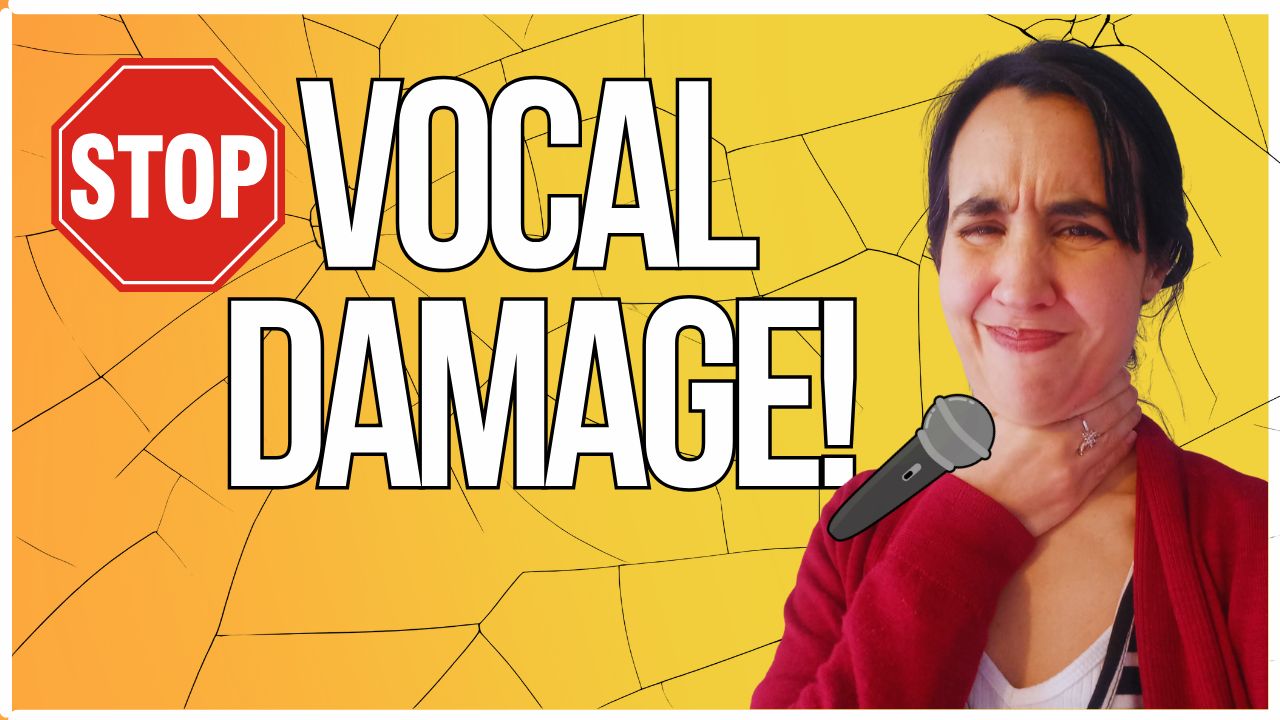
Why the Popular “Hissing Exercise” Might Be Destroying Your Voice — And What to Do Instead
Why the Popular “Hissing Exercise” Might Be Destroying Your Voice — And What to Do Instead
Do you practice the classic hissing exercise for singing, hoping it will give you better breath control… yet your voice still feels strained or tired?
Here’s the uncomfortable truth:
That very exercise might be the reason your voice feels sore.
After 15 years teaching adults, I’ve seen this drill do more harm than good. And today, I’ll explain why — and show you a simple, safer alternative that can transform your singing immediately.
A Student’s Story (That I’ve Seen Hundreds of Times)
A new student walked into my studio recently. She’d been diligently following the “inhale and hiss out” exercise recommended by her former teacher. You probably know the one:
Breathe in
Then hiss sharply while pulling the stomach inward — SSSSS…
She told me she practiced it all the time.
She also told me she always felt:
tired after singing,
tension in her throat,
and soreness after songs.
My response?
Not “in spite of the exercise”… but because of it.
By the end of our first lesson — after swapping this exercise for something functional — she was singing without strain for the first time in her life.
Let’s talk about why.
Why the Hissing Exercise Causes Damage
The intention behind the hiss is good — breath control.
The problem is that it’s based on old traditions, not updated vocal science.
1. Faulty Breath Mechanics From the Start
Most singers inhale incorrectly when attempting this drill. They either:
pull the belly in aggressively, immediately creating tension, or
push the belly out unnaturally, overstretching the abdominal wall.
Both options create rigidity in the rectus abdominis (your six-pack muscle), which runs from the sternum to the pubic bone. This tension forces the diaphragm to react in ways that sabotage healthy singing.
2. The Forced Exhale Is the Real Villain
During the hiss, singers are taught to contract the abs sharply and push the air out.
What this does internally:
The rectus abdominis contracts hard
The diaphragm is forced to relax too quickly
Air pressure shoots upward too fast
Here’s the key:
Vocal folds close in response to air pressure.
Too little pressure? They stay open.
Too much? They slam shut and over-compress.
The hiss creates excess pressure, so the folds don’t “choose” a healthy singing configuration. They’re just reacting — violently.
That reactive closure forces everything around the larynx to tighten.
Result?
strain
fatigue
soreness
and a voice that never finds true efficiency
This is the opposite of functional singing, where the vocal folds close gently and precisely for phonation.
So What Should You Do Instead?
Here’s a simple movement-based exercise that immediately reduces pressure and encourages healthy vocal fold closure.
The Arm-Opening Inhalation Exercise
This exercise teaches the body to inhale in a way that supports the voice — without force, tension, or that damaging pressure spike.
Step 1 — Raise Your Arms to the Sides
Begin with arms down by your hips.
Start lifting them outward.
Step 2 — Rotate the Palms as You Lift
This part is crucial:
As your arms rise, rotate your palms gradually so that by the time you reach shoulder height, your palms face upward and your elbows are straight.
This rotation influences ribs 5, 7, and 8 — which play a major role in efficient vocal closure.
Step 3 — Inhale Through the Mouth Softly
Open the mouth gently.
Let the air flow in without noise, without force.
Noise is actually a sign of tension and reduced airflow efficiency.
Step 4 — Sing the Moment Your Arms Reach 90 Degrees
No pause.
No holding.
No “click” at the onset.
For example, on a simple three-tone pattern:
“Ah-ah-ah”
The magic is in the timing:
movement + inhalation + phonation
all coordinated without delay.
This eliminates the micro-hold that so many singers do unconsciously — the one that creates the harsh onset that damages vocal folds over time.
Why This Works
It opens the ribs in the regions that improve vocal fold efficiency
It prevents over-engagement of the abs
It reduces high-pressure exhalation
It removes the harmful pause between breathing and phonation
It guides the voice into its singing function instead of a reactive, compressed state
Almost no student gets it perfect on the first try — and that’s okay. Your body is relearning a new, healthier coordination.
Final Thoughts
The hissing exercise isn’t harmful because it’s “bad” — it’s harmful because it teaches the body to sing with tension and high pressure, the opposite of what functional singing requires.
You deserve ease, freedom, and a voice that feels good.
Try the arm-opening exercise today and notice the difference in your tone, your onset, and the comfort in your throat.

Some feedback from past students!
Frankie Lam

Highly recommended; Jorgelina, the primary singing instructor knows her stuff and really helped guide me through finding my mixed voice.
She has huge amounts of knowledge on the science and theory behind singing and approaches lessons in a very structured but still personalised manner. Very happy with my decision to take lessons here.
Jess Reeve - Taylor
I really struggled with the high notes before coming to Jorgelina! She's coached me through so many techniques and although there is so much to learn I feel like I've seen lots of progress already. My confidence has grown massively since joining the group classes too and she encourages performing at every opportunity. I love that Jorgelina takes a holistic approach to singing and understands that it's not just about sounding great, the voice also has strong connections to the body and mind. Thanks Jorgelina!
Rupert Wilson
Bruh. Jorgelina is an awesome singing teacher! Super knowledgable, very engaged and 100% passionate. She's helped me a lot. Her methods and techniques feel organic and natural. She moves at your pace and is super supportive about you achieving your singing goals. Would recommend her to anyone with a vagus nerve (thats everyone btw!).
Get In Touch
Learn to sing with us!
© 2025 The Functional Singer - All Rights Reserved
Facebook
Instagram
Youtube